Malagasy Discovery: from Andasibe to the Lagoons of Ifaty via the Highlands and Isalo
Fifteen days for a first encounter with Madagascar: the forest of indris, the villages of the Highlands, Isalo, then three nights on the shores of Ifaty lagoon.
Duration
15 days
From
€1,130/pers.
Ideal seasons
Apr, May, Jun, Jul, Aug, Sep, Oct
Style
Guided tour
Comfort
budget
Travelers
Family, Couple, With friends
The spirit of travel
This trip is a first encounter with Madagascar, accessible to all and also designed for families. In fifteen days, it crosses the island from the humid forest of the East to the lagoons of the Mozambique Channel, following the route of the Highlands and taking time to stop along the way.
After a first night in Antananarivo, we head to Andasibe and its forest, home of the indri, the largest of the lemurs. On the return, we spend the night with Father Pedro, at the gates of the capital: the story of Akamasoa, born on a landfill more than thirty years ago, is one of the strongest stories Madagascar has to tell.
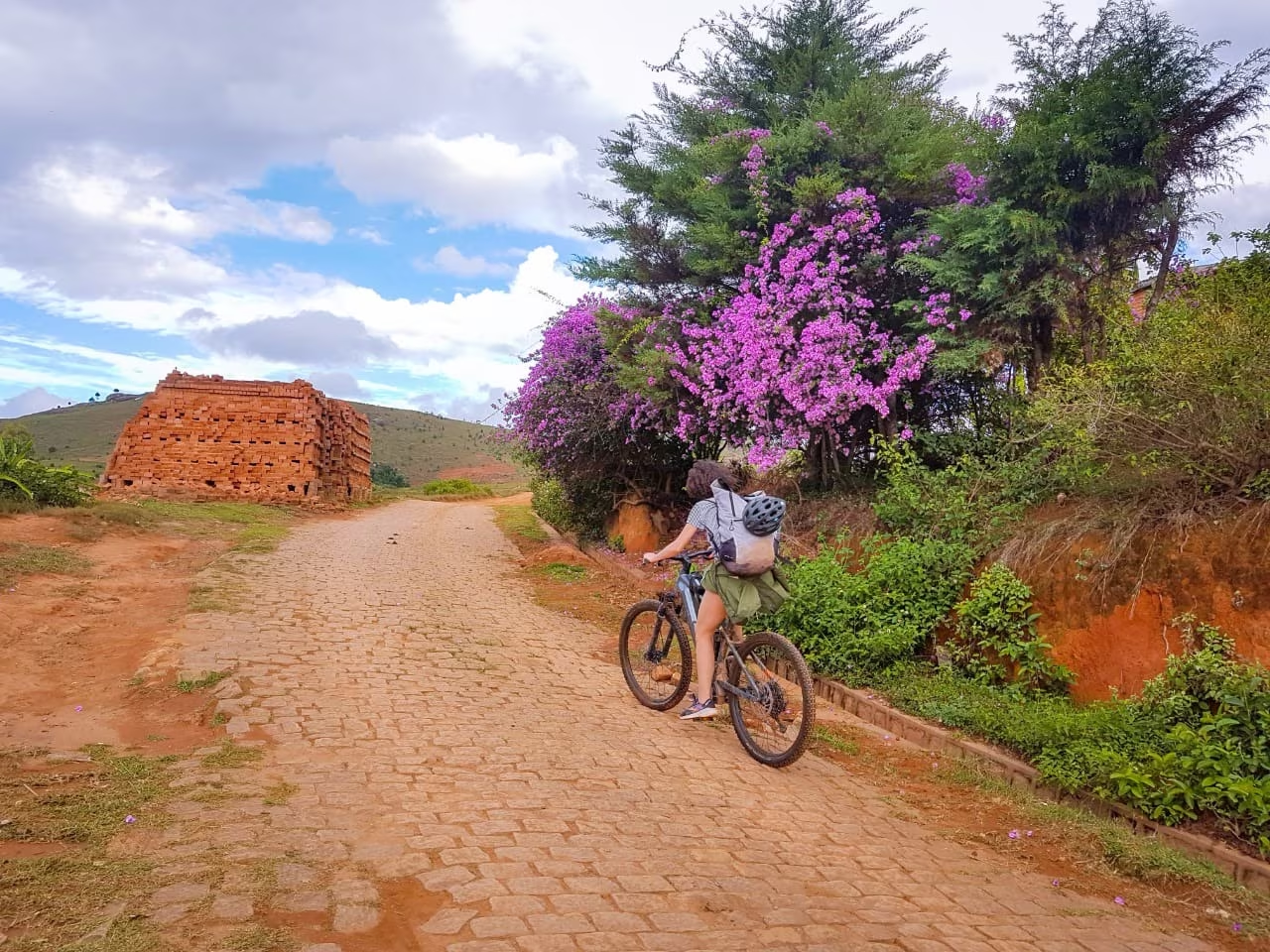
We then make our way to the Highlands. After a night in Antsirabe, we reach the Manandona valley, where we set out on an easy hike with the guide from the village community, at the foot of the Ibity massif, before a night in a village guesthouse. Then come the inlayers of Ambositra, the Ranomafana forest, Fianarantsoa and the descent of the Upper-Matsiatra by canoe, to the tea plantations of Sahambavy.
Further south, the ring-tailed lemurs of Anja and the sandstone canyons of Isalo are discovered on foot. The journey ends with three nights in Ifaty, on the edge of a lagoon closed off by a coral barrier: free time to rest, swim and discover at your own pace the vezo villages and the spiny forest.
We travel with a driver-guide from the first day until Ifaty, joined by a guide from 6 travelers onward. In the parks and reserves, local guides accompany us. Accommodations are simple and comfortable, with one more rustic night in Manandona, in village houses, where showers are taken by bucket. The journey runs on fixed dates, from late March to December. Children's rates: 10% less from 8 to 12 years old and 5% less from 13 to 14 years old, for a child sharing a room with two adults; for younger children, please contact us.
Détours Madagascar is committed to the Travelife certification process. On this journey, this is translated concretely: in Manandona, we lodge in the village and walk with the guide from the village community; in Anja, the reserve is managed by the association of villagers, which dedicates its revenues to agriculture, health and school; in each park, we work with local guides, and we observe wildlife without feeding or touching it.
The stages of your journey
Highlights
Day-by-day itinerary
Arrival in Antananarivo
Upon arrival at Ivato international airport, a member of the Détours Madagascar team welcomes us and drives us to our hotel, in the city.
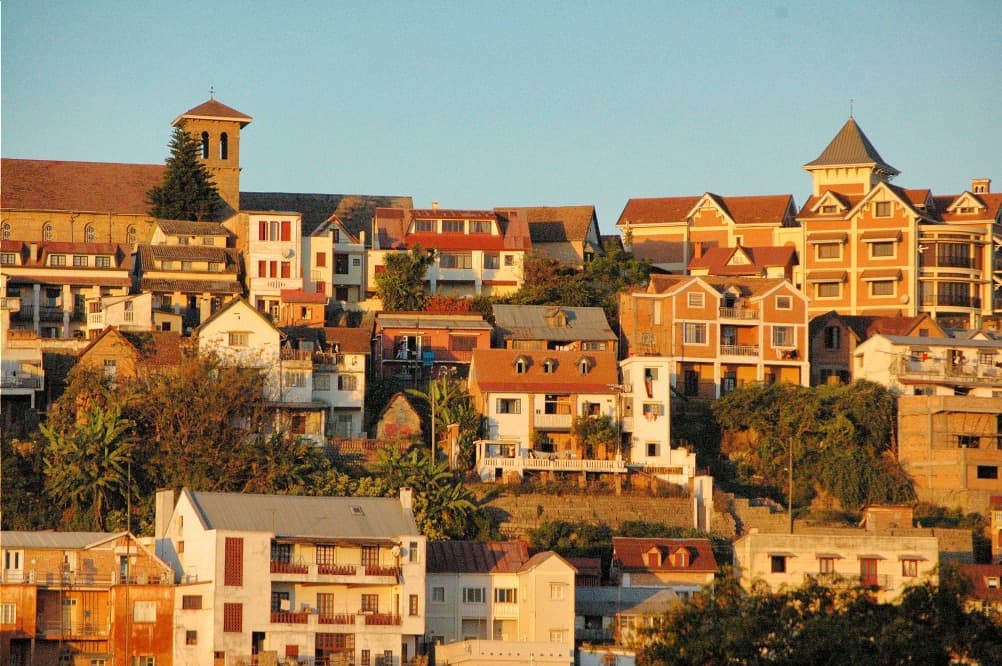
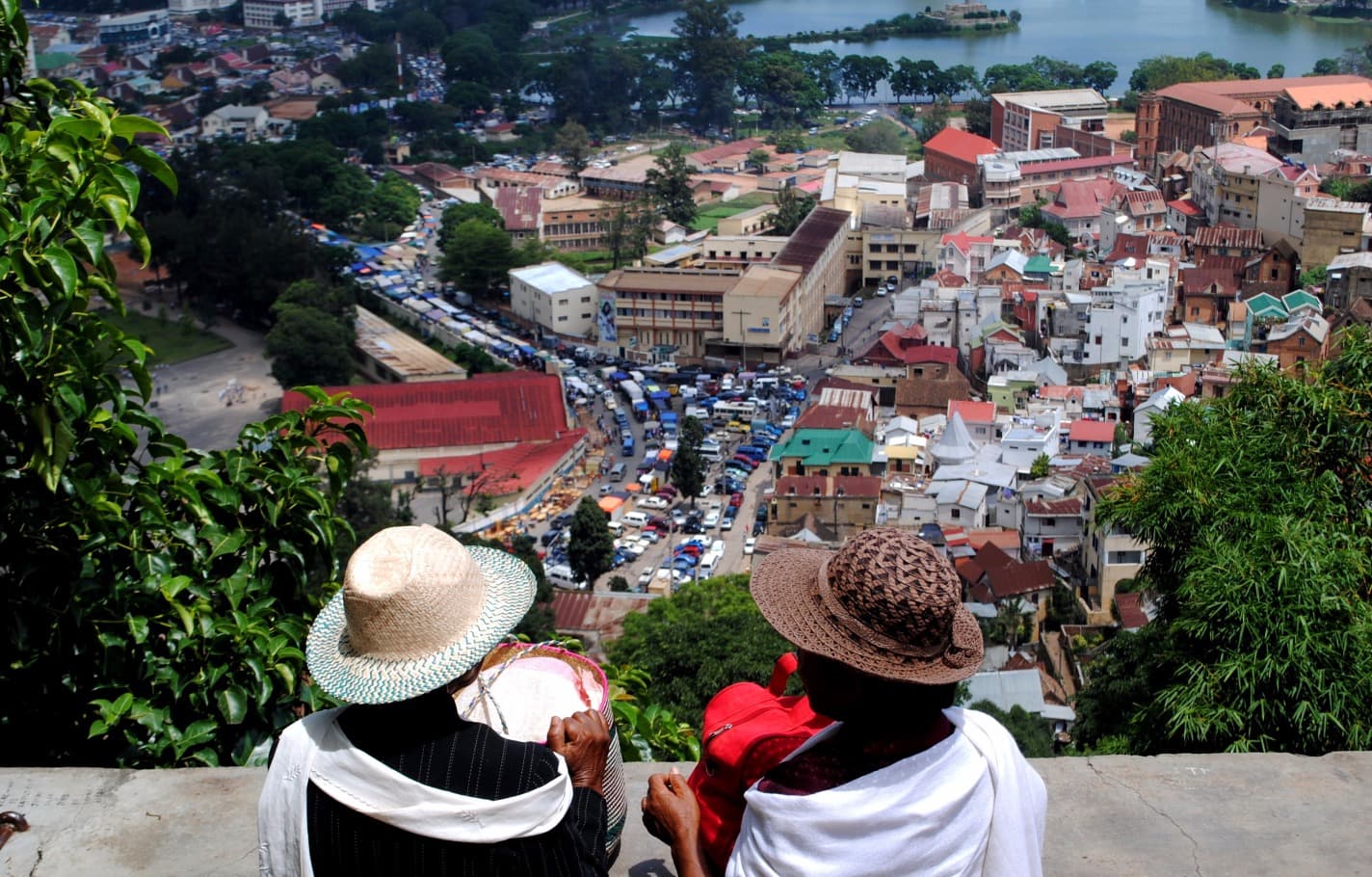
Antananarivo is built on about a dozen hills, in the middle of the rice fields of the Betsimitatatra plain. Multi-storey brick houses with wooden balconies crowd together on the slopes, and long staircases connect the upper districts to the markets of the lower city. The city was born in the 17th century on the highest of these hills, around the palace of the Merina sovereigns.
If our flight arrives in the afternoon, we have time for a first walk with our driver-guide: Independence Square, the lively Analakely avenue, or a viewpoint from which the view opens out over the entire city at sunset. Life takes place largely in the street, among street vendors, minibuses and rickshaws, in a joyful disorder that sets the tone for the journey.
If our flight arrives in the evening, we go directly to the hotel to rest.
At the end of the day, our team answers our questions about how the trip will unfold. We meet our driver-guide, who will accompany us all the way to Ifaty. Dinner is free, and it's an opportunity to taste the cuisine of the Highlands, based on rice, greens and zebu meat.
Airport transfer: approximately 45 minutes.
Towards the East and Andasibe Forest
After breakfast, we leave Antananarivo heading east on National Road 2, which connects the capital to Tamatave, the island's main port. We depart the city early to avoid traffic congestion.
Gradually, the hills of the Highlands give way to more rugged terrain. The road descends in switchbacks toward the forest, passing through villages of wooden houses, terraced rice paddies, and hills where charcoal is drying. The climate becomes more humid, vegetation denser, and waterfalls appear along the roadside.
We make a few stops along the way, depending on the landscapes and village markets, where fruits, vegetables, and woven baskets are piled high. We arrive in Andasibe in early afternoon.
Andasibe is an old forest village, located in the heart of one of the East's great rainforests. The afternoon is free for us to settle in and walk around the village, at the edges of the park we will visit tomorrow morning.
At the end of the day, private or village reserves offer night visits with headlamps, to discover chameleons, frogs, and small nocturnal lemurs. These outings are not included, and our driver-guide can help us organize them on site.
Journey: approximately 3 hours 30 minutes, 140 km.
The Indris of Andasibe
We leave early for Andasibe National Park, in the Analamazaotra reserve, accompanied by a local guide. The morning is the best time of day: it's when the indris sing.
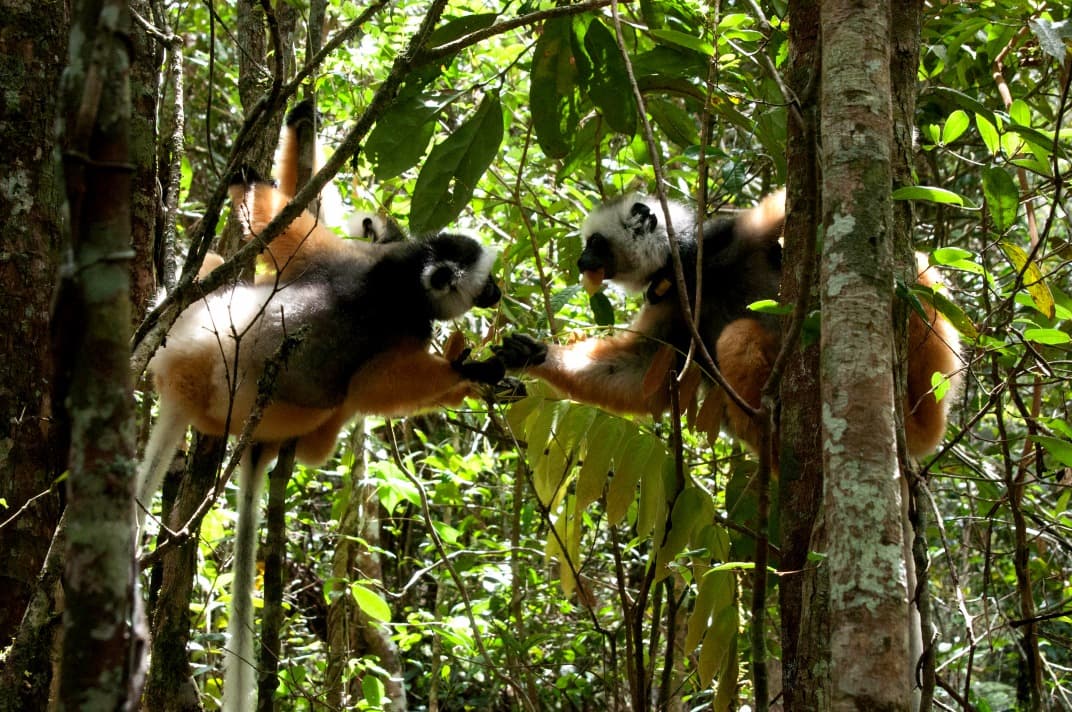
The indri is the largest of the living lemurs. Black and white, without a tail, it lives in small family groups in the canopy. Its song, a long powerful wail that carries for several kilometers, resonates throughout the forest and remains one of the most striking memories of a trip to Madagascar. The guide knows the groups accustomed to the presence of visitors, and the encounter is often possible, although no sighting is guaranteed.
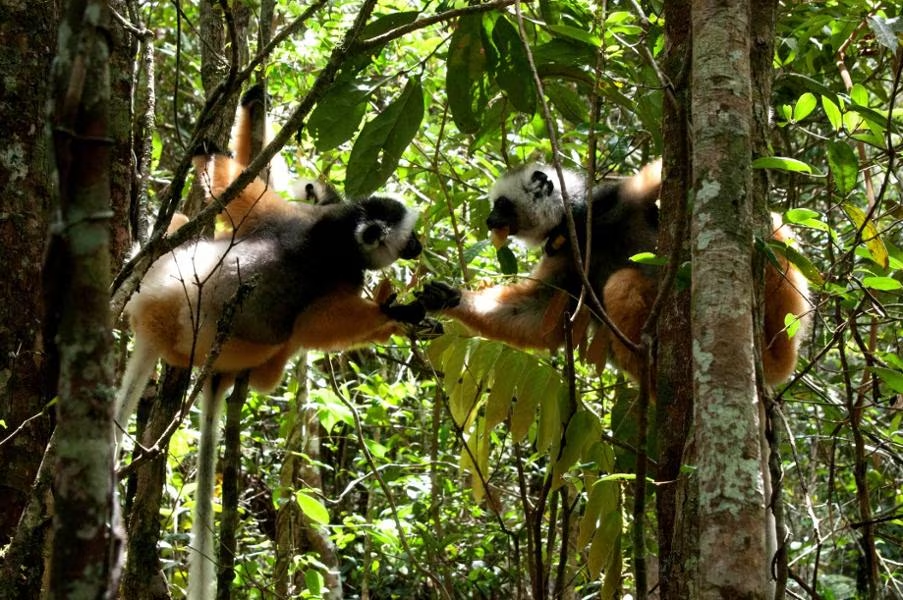
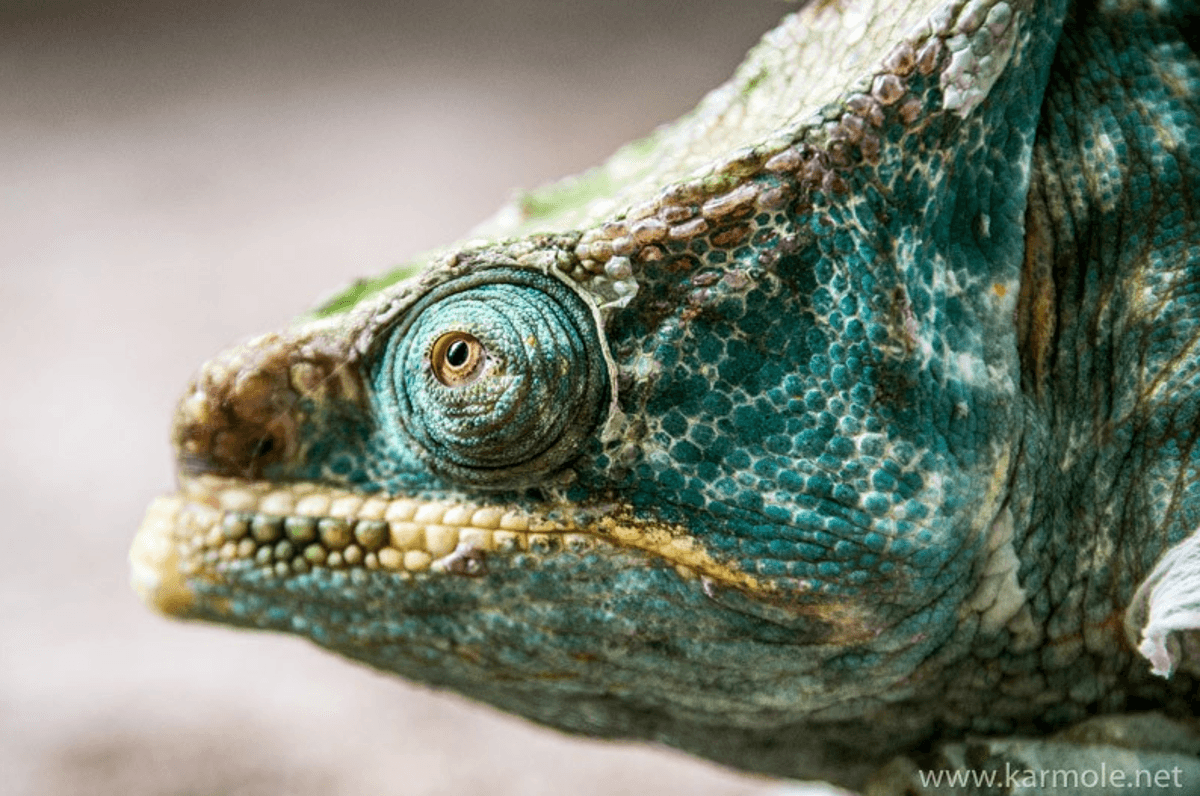
The forest is also home to other lemurs, such as the diademed sifaka or the bamboo lemur, as well as chameleons, geckos and many birds. The guide shows us orchids, tree ferns, rosewood and medicinal plants that villagers still use.
The trails are humid and sometimes slippery, and the walk is at a leisurely pace, suited to children. We observe the animals in silence, without feeding or touching them.
The afternoon is free. We can rest, walk in the village or return to the forest in a nearby reserve. Second night in Andasibe.
Park visit: approximately 3 hours of walking.
Return to the capital, an evening at Father Pedro's
We head back onto National Road 2 heading west, in the opposite direction, through the forest and then the highlands of the High Plateaus. This time, we do not pass through the capital: we stop at its gates, at Father Pedro's place.
Pedro Opeka is a priest of Argentine origin who arrived in Madagascar in the 1970s. At the end of the 1980s, moved by the misery of families living from the Antananarivo landfill, he founded the association Akamasoa with them, "the good friends". Over more than thirty years, these families have built their homes, their schools and their clinics. Entire neighborhoods have emerged on the hills, where tens of thousands of people live today, and many residents work in the nearby granite quarry.
The story of Akamasoa is one of collective work, founded on education, work and dignity. It says much about Madagascar, its poverty as well as its energy.
We spend the night at the association's hostel, simple and welcoming. Our mid-day arrival gives us time to settle in and discover the place, with respect for the lives of those who live there.
This stop also allows us to avoid crossing the capital during rush hours: tomorrow, we will leave early towards the south and the High Plateaus.
Route: approximately 3 hours, 130 km.
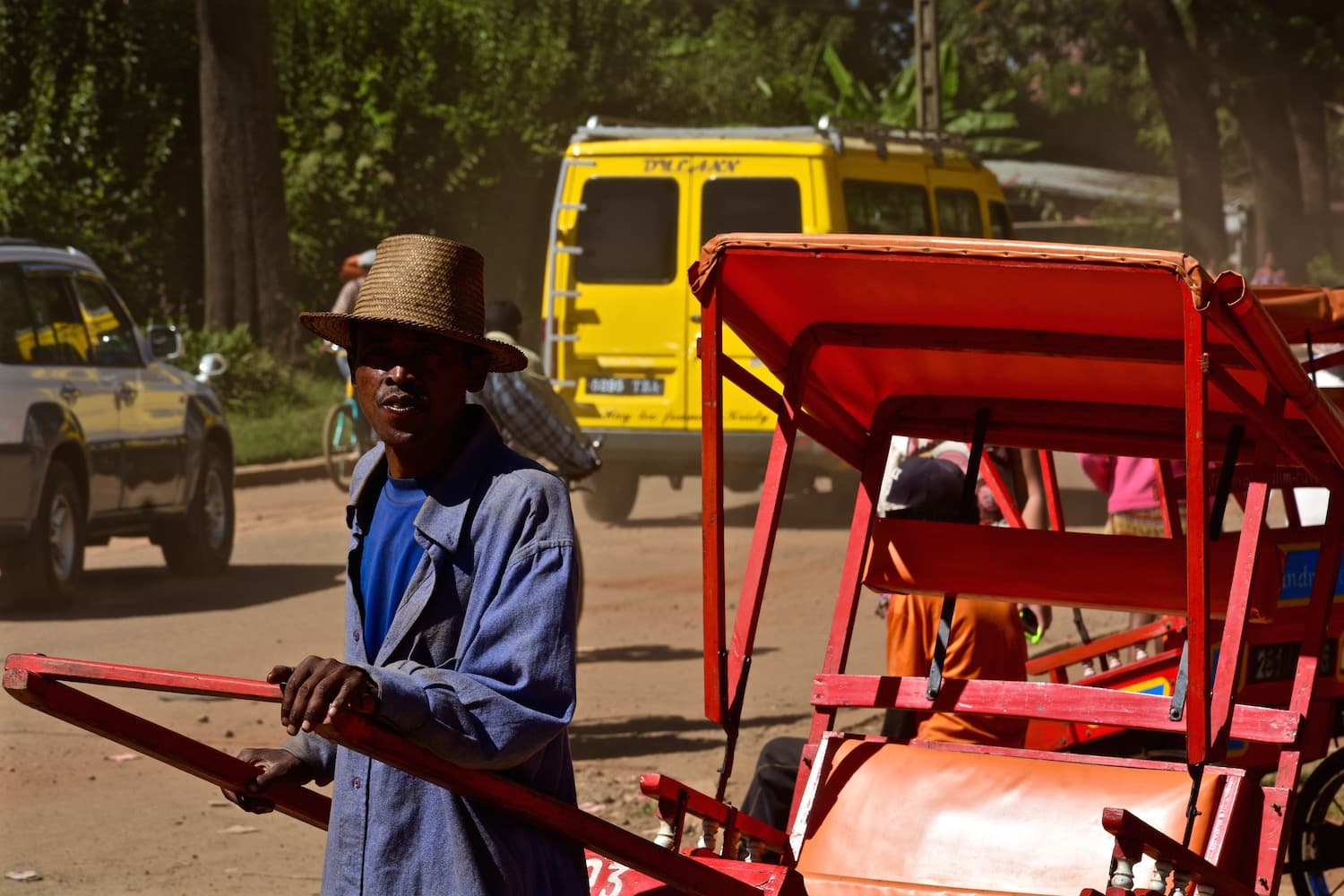
Ambatolampy, then Antsirabe, the spa town
We leave early heading south on National Road 7, the great road of the Highlands. Terraced rice fields, red brick villages and cultivated hills succeed one another.
First stop in Ambatolampy, a small town known for its aluminum foundries. In open-air workshops, craftsmen recover cans, engine parts and used objects, melt them down and pour them into sand molds to make cooking pots found in every kitchen on the island. It is a true recycling industry, one of the most important in the Indian Ocean, and our driver-guide explains how it works to us.
We arrive in Antsirabe in early afternoon. Founded at the end of the 19th century around its thermal springs, the city has retained its wide avenues lined with jacarandas, a railway station and a Thermal Springs hotel from the colonial era. It is also the city of pousse-pousse, colorful and countless, which remain the most common means of transport.
The afternoon allows us to discover its craftsmen: the workshops where miniatures of bicycles and cars are made from recycled materials, those who work with zebu horn, or the embroiderers. We spend the night in an ecolodge in a peaceful setting, surrounded by gardens.
Drive: approximately 3 hours 30 minutes with stops, 170 km.
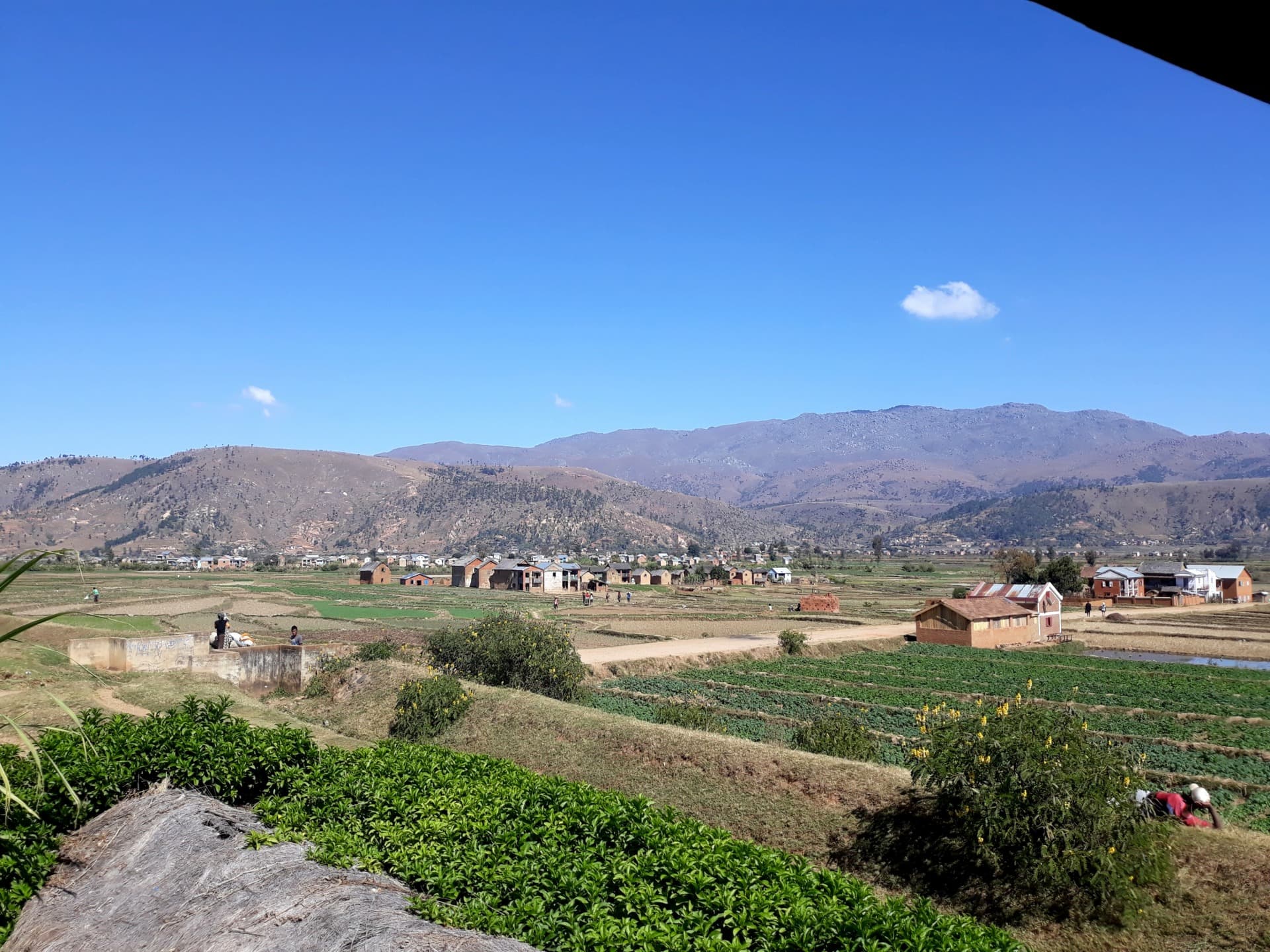
The Manandona valley, at the foot of Ibity
After breakfast, we leave Antsirabe heading south. About twenty kilometers further on, we leave the national road for the Manandona valley, nestled at the foot of the Ibity massif. The community guide awaits us there for an easy hike. He knows every trail, every family, and tells us about life in the valley.
We first climb the foothills trails, where the view opens onto terraced rice paddies, villages and the quartzite ridges of Ibity. This massif is home to very particular flora, with aloe, succulents and orchids that only grow on its slopes.
We then descend back into the valley to meet the inhabitants. All are rice farmers and own zebus. Some raise silkworms, others are blacksmiths, basket weavers or carpenters, and craftsmanship is present in every hamlet. Lunch is taken along the way, with the valley at our feet.
In the late afternoon, we settle in the village, in a village guesthouse, for the night. Comfort is simple: outdoor toilets and bucket showers. The welcome, however, is warm, and dinner is shared with our hosts. The village children are often the first to come meet us.
Drive to Manandona: approximately 40 minutes, 20 km. Easy hike: approximately 4 hours, with moderate climbs.
Picnic lunch

The inlay workers of Ambositra, then Ranomafana
We leave the Manandona valley and resume national road 7 heading south, through the highlands. The landscapes gradually change: the hills are covered with pine and eucalyptus trees, and the multi-story houses feature balconies with carved wooden railings.
We stop in Ambositra, the capital of woodcraft. In their workshops, marquetry makers assemble pieces of wood in different colors to create scenes of rural life, landscapes and geometric patterns. The region is also home to the Zafimaniry, whose woodworking expertise is inscribed on UNESCO's Representative List of the Intangible Heritage of Humanity. We discover the artisans' techniques and the wood species they use.
After lunch, we continue south, then we leave national road 7 to head down towards Ranomafana. The road then descends into rainforest, along the Namorona river, between waterfalls and tree ferns. The climate becomes warmer and more humid.
Ranomafana, meaning "hot waters" in Malagasy, is a small thermal village nestled at the bottom of the valley. We arrive there at the end of the day and settle in for the night, at the edge of the forest that we will explore tomorrow morning.
Route: approximately 5 hours including stops, 200 km.
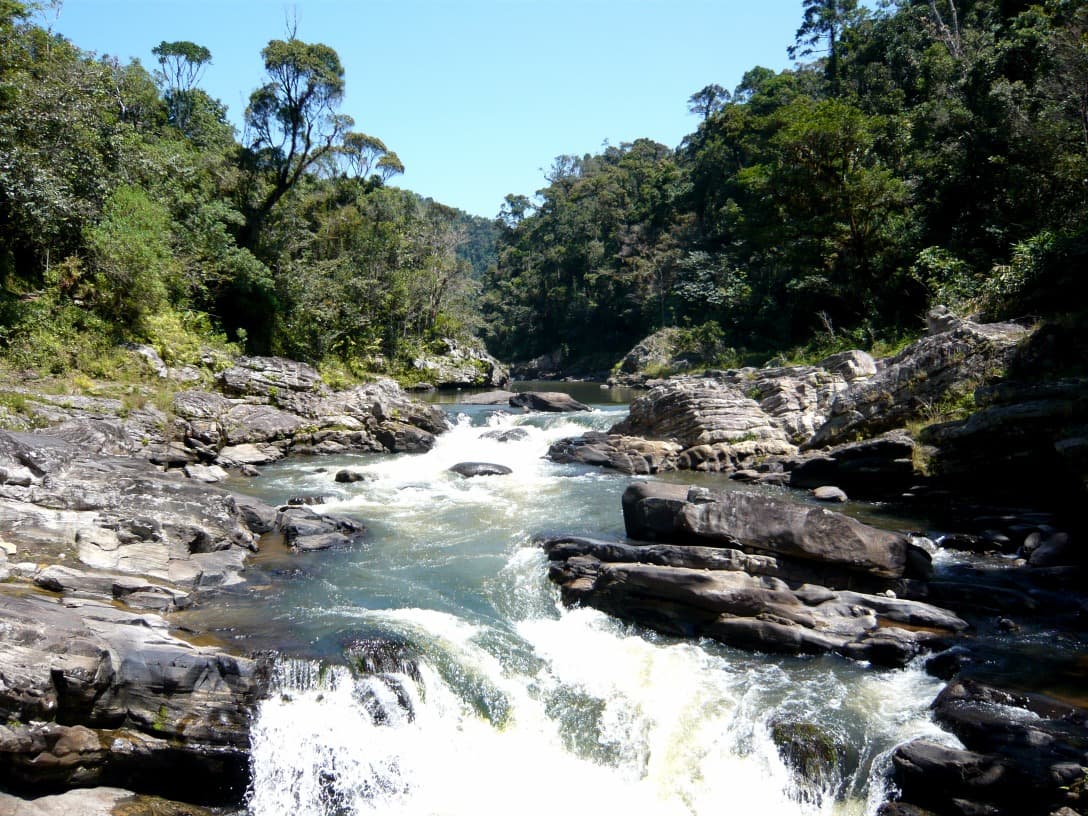
The Ranomafana Forest, then Fianarantsoa
We spend the morning in Ranomafana National Park, accompanied by a local guide. This park protects a large montane humid forest, inscribed on the UNESCO World Heritage list along with the other forests of the East.
The trails climb and descend through dense forest, crossed by streams. The guide helps us spot lemurs: Milne-Edwards' sifaka, red-bellied lemur or bamboo lemurs, one of which, the greater bamboo lemur, was considered extinct before being rediscovered here. We also encounter chameleons, colorful frogs and many birds. No sightings are guaranteed, but the forest almost always holds surprises.
After lunch, we head back up to the Highlands to reach Fianarantsoa, capital of the Betsileo country. The city is built on several hills. Its upper town, with its paved alleyways, churches and old houses with balconies, overlooks the commercial districts and markets of the lower town.
Late afternoon, we can stroll through the upper town, from where the view extends over rice paddies and hills. Fianarantsoa is also a city of schools and churches, and an important intellectual center for the entire South of the island. Accommodation for two nights.
Walk in the park: approximately 3 hours. Drive to Fianarantsoa: approximately 1 hour 30 minutes, 60 km.
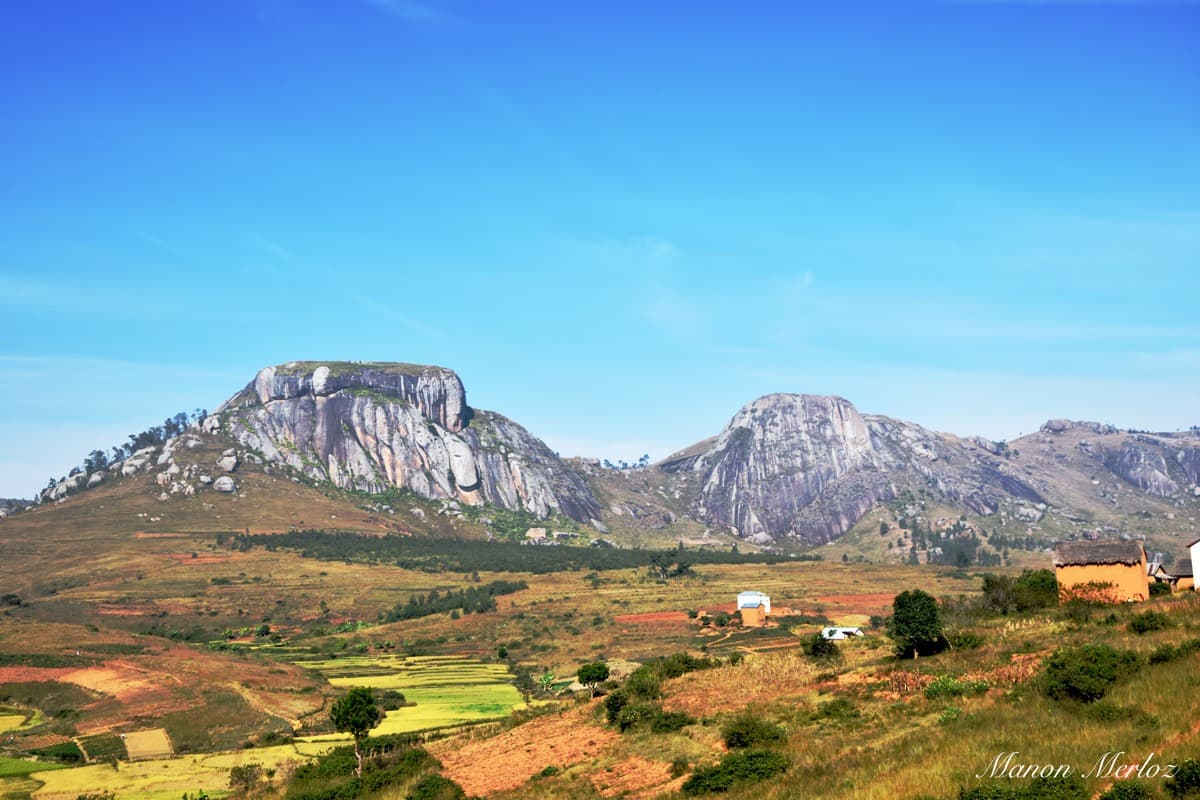
By pirogue on the Haute-Matsiatra, then the tea of Sahambavy
Mahasoabe → Sahambavy
This morning, we head to the village of Mahasoabe, about twenty kilometers east of Fianarantsoa. The canoe paddlers await us there for a descent of the river in a traditional canoe.
For approximately two and a half hours, the river winds between the rice paddies and granite domes. Navigation is calm and accessible to everyone. We make several stops to walk through the villages and observe rural life: rice transplanting, brick factories, women washing clothes at the water's edge. Herons, egrets and kingfishers often accompany our descent.
We dock at the village of Iseta, then walk for half an hour through fields and hamlets to our vehicle.
In the afternoon, we reach Sahambavy and its tea plantation, created in the late 1970s. Tea plants cover the hills with their regular rows, an intense green. We discover the harvesting, drying and processing of the leaves, before tasting this characterful tea. Part of the plots is cultivated by farmers from neighboring villages.
We return to Fianarantsoa at the end of the day, for a second night in the Betsileo capital. The region is also known for its vineyards, planted in the 19th century by missionaries.
Canoe: approximately 2 h 30. Walk: approximately 30 minutes. Road: approximately 1 hour, 40 km.

The ring-tailed lemurs of Anja, then Isalo
We leave Fianarantsoa heading south on National Road 7. The landscape is a patchwork of terraced rice paddies, crops and villages, then the terrain becomes more mineral, with large granite domes.
We pass through Ambalavao, a small town known for its antemoro paper, handmade from the bark of a shrub and decorated with dried flowers, and for its large zebu market.
A little further on, we stop at the Anja village reserve. A forest of fig trees, lianas and orchids has developed there between large rocky outcrops, at the foot of granite cliffs. It is the domain of ring-tailed lemurs, the lemurs with ringed tails, which spend a lot of time on the ground and are easily observed. The reserve is managed by the villagers' association, which devotes its income to agriculture, health and education for families living nearby.
We then continue south, into Bara country, across the Horombe plateau, a vast expanse of savanna where herds of zebus graze. At the end of the road appear the sandstone cliffs of Isalo. We arrive in Ranohira in late afternoon and settle in for two nights. The evening light on the cliffs gives a first glimpse of tomorrow's hike.
Road: approximately 5 hours including stops, 290 km. Walk at Anja: approximately 1 hour.
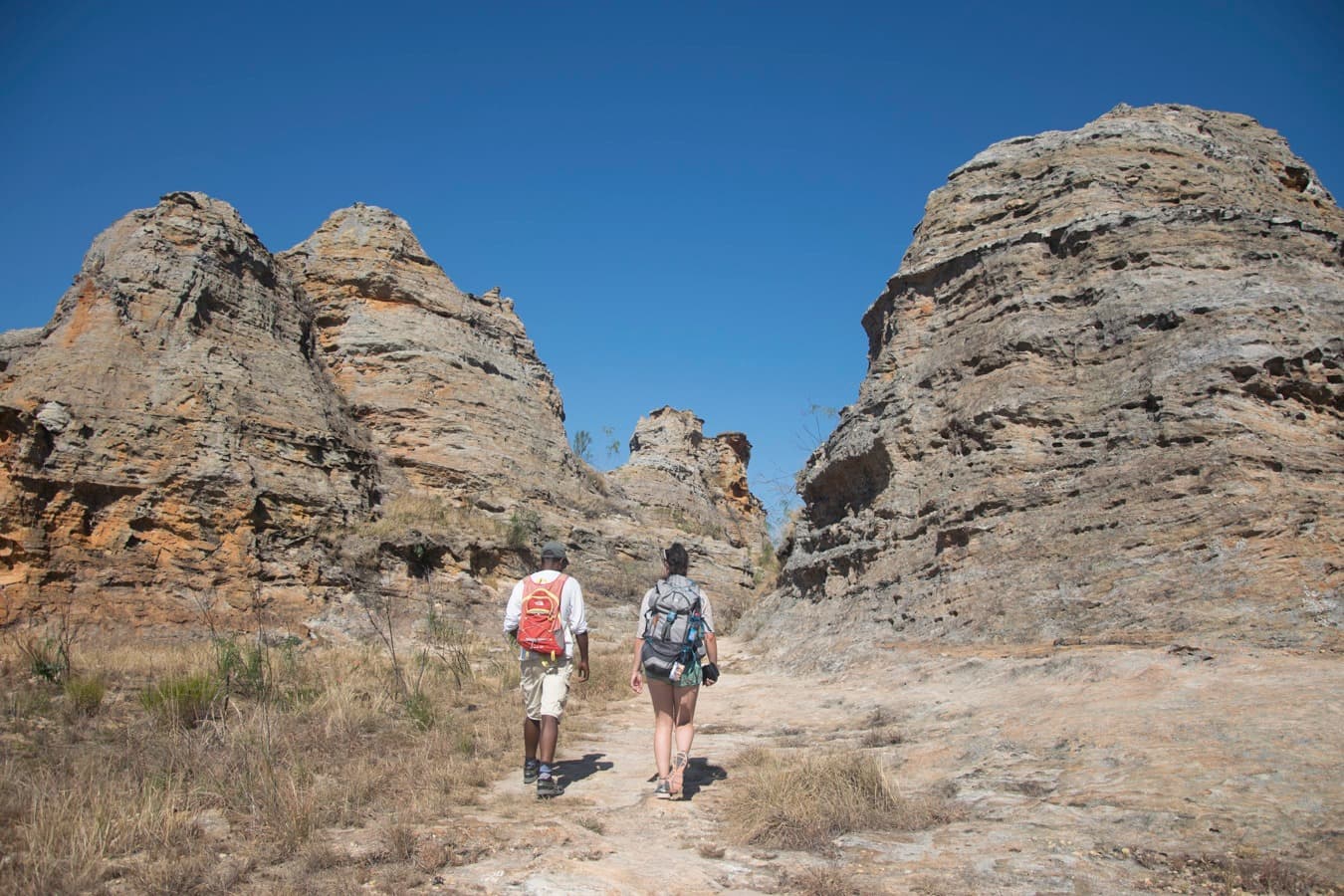
The canyons and natural pools of Isalo
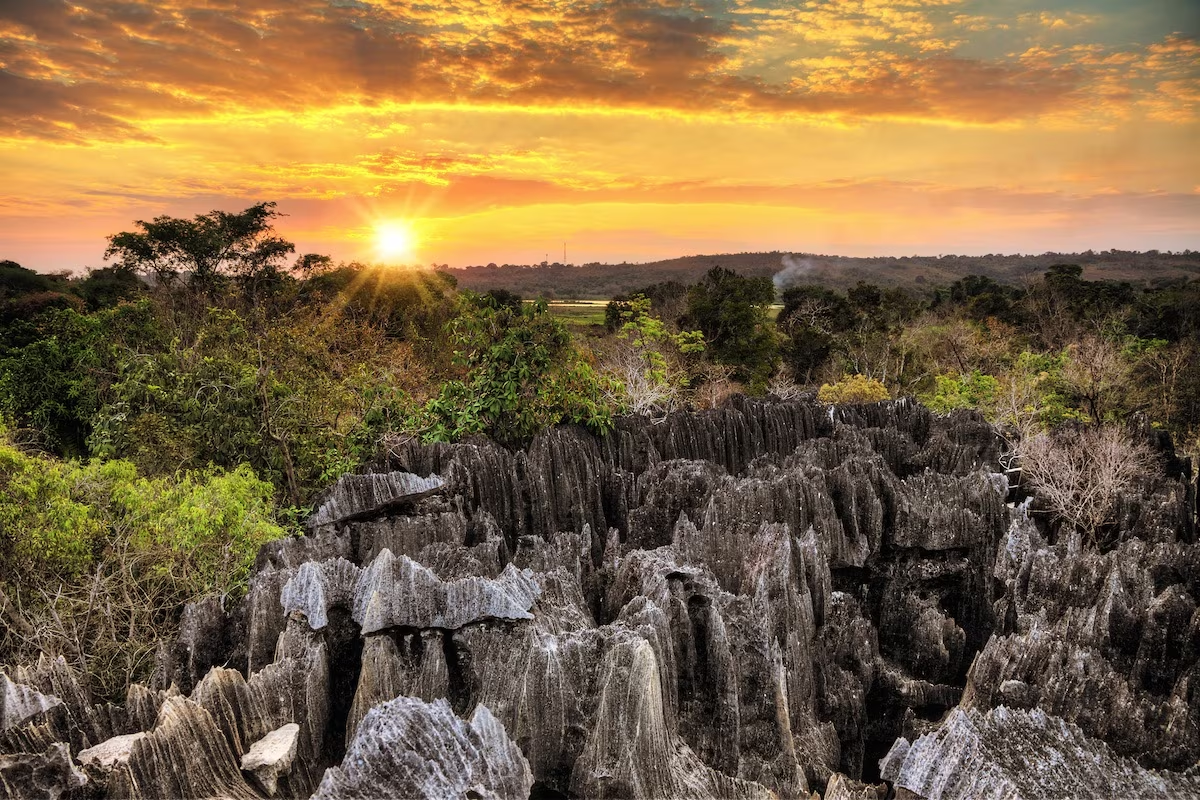
We dedicate the day to Isalo National Park, accompanied by a local guide. The massif is a large sandstone plateau, carved by erosion into canyons, cliffs and ruiniform formations that change color with the light.
We first walk on the plateau, among sculpted rocks, where plants adapted to aridity grow: aloes, euphorbias and pachypodiums, these "elephant's feet" with swollen trunks. Then we descend into a canyon, where shade and water sustain denser vegetation, with ferns and palm trees.
At the bottom of the canyon, a natural pool with clear waters awaits us. Swimming is possible, and it is often the preferred moment for children. The picnic, prepared by our driver-guide, is taken in the shade, by the water's edge.
The guide also tells us about the Bara, the people of the region, zebu herders, and the caves of the massif, where some families once deposited their dead. These places are respected, and we follow his guidelines.
With a bit of luck, we encounter ring-tailed lemurs or Verreaux's sifakas near water points. At the end of the day, we return to Ranohira. The cliffs of Isalo then take on beautiful red hues at sunset.
Hiking: approximately 5 hours, with some climbs and descents.

Towards the sea and the Vezo villages of Ifaty
Ranohira → Ifaty
We leave Ranohira for the final leg of our journey. We first pass through Ilakaka, a town that sprang up almost overnight in the late 1990s with the discovery of a major sapphire deposit. Its trading posts and storefronts give the town a gold rush atmosphere.
Further on, the road runs along Zombitse forest, then the landscape becomes drier. The first baobabs appear, and thorny vegetation announces the Southwest. We occasionally pass Mahafaly tombs, adorned with carved poles and paintings that tell the life stories of the deceased.
We arrive in Tuléar, the major city of the Southwest, before heading up the coast northward to Ifaty. Here begins the land of the Vezo, a fishing people who live from the sea, their outrigger canoes and nets.
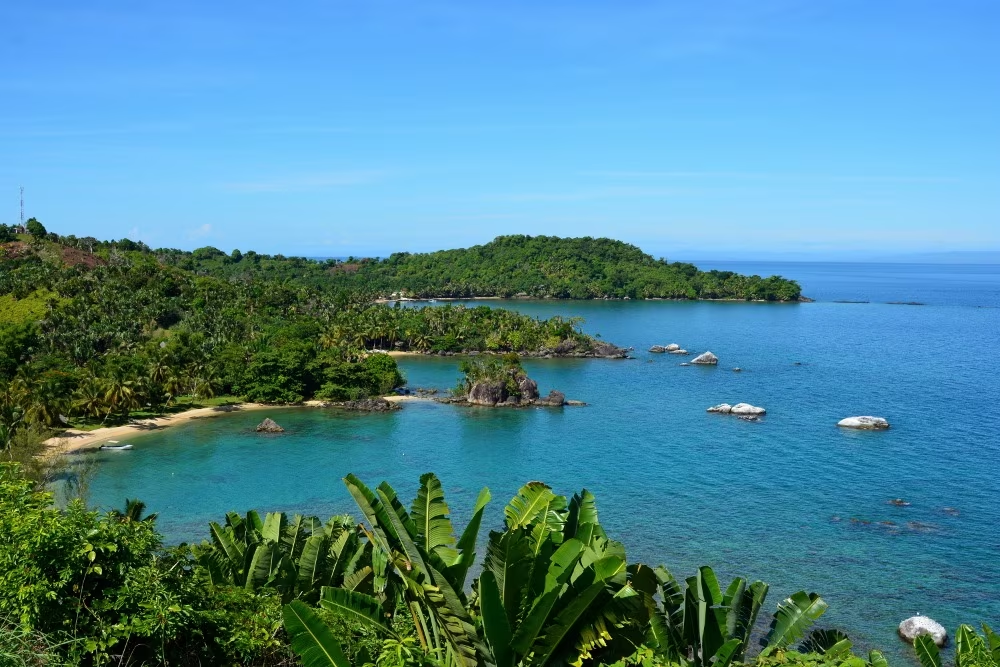
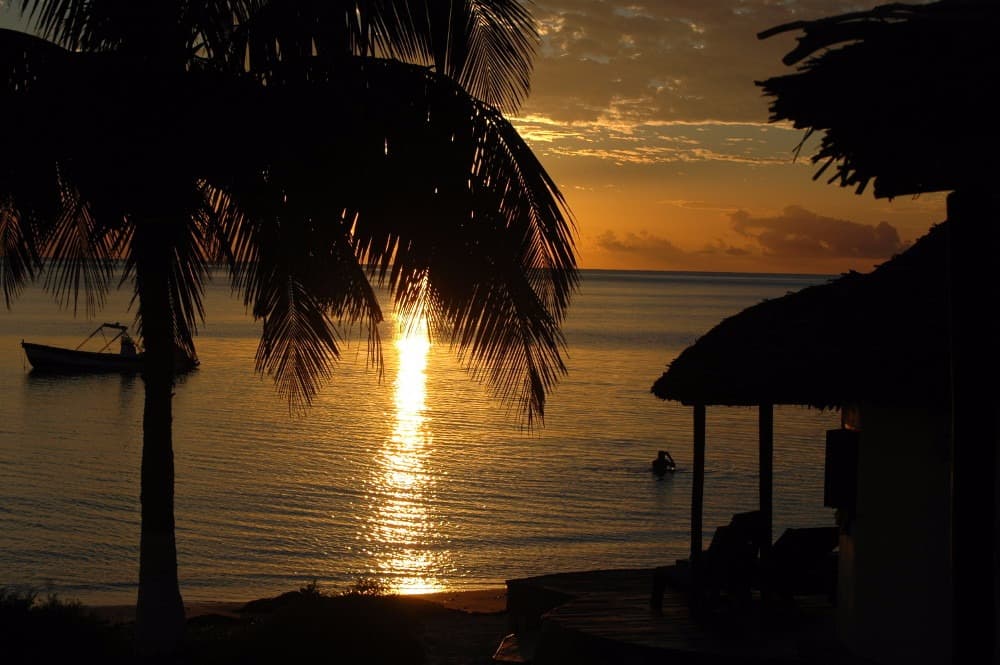
In mid-afternoon, we settle by the lagoon for three nights. We say goodbye to our driver-guide, who will head back to the capital. The rest of the day is free: the beach, swimming in the lagoon, or a first stroll along the shore, where fishing pirogues return from their catch at day's end. The sun sets here directly over the sea.
Route: approximately 5 hours including stops, 270 km.
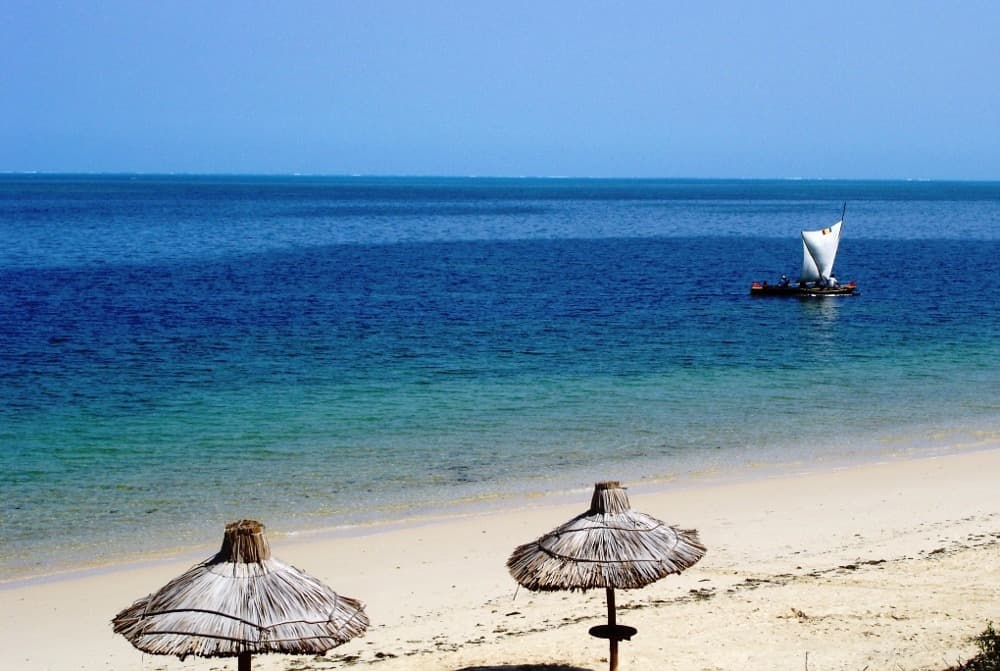
Two free days in Ifaty, between land and sea
On land.
This day is free, to enjoy the lagoon and the peaceful rhythm of Ifaty. Nothing is scheduled: everyone chooses according to their preferences, and the hotel team can organize outings on site.
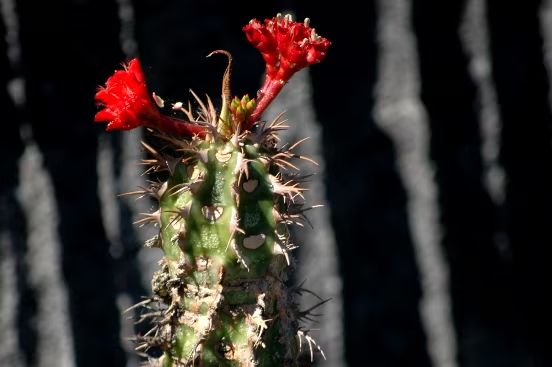
For those who enjoy walking, the hinterland of Ifaty is home to a unique thorn forest found nowhere else in the world. Didiereaceae plants raise their stems covered in spines, alongside euphorbias, pachypodiums and large baobabs, some of which are several centuries old. The Reniala forest, very close by, protects part of this landscape and can be visited with village guides early in the morning, when birds are most active. The visit can also be done by oxcart, an outing that children particularly enjoy.
Along the coast, the villages of Mangily, Ifaty and Madiorano live from fishing. A walk along the beach allows you to see fishermen repairing their nets, women preparing dried fish and carpenters carving new pirogues from a tree trunk.
For others, the day can simply be spent at the beach. The lagoon water is calm, clear and warm for much of the year.
On the sea.
This second free day is focused on the sea. The Ranobe lagoon is closed by a long coral reef, which protects it from the swell and makes it an ideal swimming spot.
In outrigger canoes, Vezo boatmen take us out on the lagoon, under sail or pole, to the coral reef. With a mask and snorkel, we then discover coral gardens and fish of all colours. Further out, boat trips sometimes allow us to observe dolphins and, from July to September, humpback whales, which come to give birth in the warm waters of the Mozambique Channel. For divers, diving centres offer supervised outings.
At low tide, a walk along the shore reveals the seagrass beds, shells and small creatures of the lagoon. Corals remain fragile: we do not touch them and do not walk on them.
In late afternoon, the sight of pirogues returning to the village, sails billowing in the wind, is a beautiful moment to end the trip.
These activities are not included: they remain at each person's choice, to preserve the freedom of these final days.
Tuléar, then return flight
Ifaty → Tuléar
Depending on our flight schedule, the morning may be free for a final swim in the lagoon or a walk on the beach.
The hotel then takes us to Tuléar airport for the domestic flight to Antananarivo. Seen from the plane, crossing the island sums up the entire trip: the coast and its lagoons, the South-West savanna, the Isalo canyons, then the rice paddies and hills of the Highlands.
Upon arrival in Antananarivo, a member of the Détours Madagascar team welcomes us at Ivato airport and accompanies us until we check in for our international flight, which most often departs in the evening or at night. If time permits, we can refresh ourselves and have dinner near the airport before departure.
This is the end of a journey that has taken us from the forest of the indris to the lagoons of the Mozambique Channel, through the Highlands, their rice paddies and villages. We hope it will leave each of you with the memory of the indris' song in the early morning, the trails of Manandona and the welcome of our hosts, the evening at Father Pedro's and the vezo canoes returning at sunset. Veloma, goodbye, and see you soon in Madagascar.
Transfer to Tuléar airport: approximately 45 minutes. Flight from Tuléar to Antananarivo: approximately 1 hour 15 minutes.
Price per person
Indicative price per person, based on double room. Each trip is customized according to your preferences.
This trip can be tailored to your preferences
This itinerary provides an excellent foundation for discovery, but it can be fully customized. Our local advisors build each trip tailored to your budget, dates and preferences.
Not included
- International flights
- Domestic flight Tuléar to Antananarivo (fluctuating rate, booked separately)
- Visa fees
- The other lunches, dinners (except in Manandona) and beverages
- Activities in Ifaty (pirogue, excursions, snorkeling, forest outings)
- Night visits to Andasibe
- The single room supplement
- Insurance assistance, repatriation and cancellation
- Tips and Personal Expenses
Included
- Airport reception and transfers in Antananarivo
- A driver-guide and the vehicle, fuel included, from day 1 to day 12
- Accommodation in double or twin room for 14 nights (hotels, hostel, village guesthouse)
- Breakfasts, full board at Manandona (lunch, dinner and breakfast) and picnic for the hike in Isalo
- Entrance fees and local guides for parks and reserves (Andasibe, Ranomafana, Anja, Isalo) and hiking with the village community guide in Manandona
- The descent of the Haute-Matsiatra by canoe and the visit to the Sahambavy tea plantation
- Hotel transfer to Tuléar airport and airport assistance at Antananarivo on day 15
- The assistance of our team in Antananarivo throughout the trip
Practical Information
Registration is considered firm and final after payment of a deposit of 40% of the total price and acceptance of the specific terms of sale.
The balance must be paid no later than 45 days before the departure date.
See our specific terms of sale for full details.
In the event of cancellation by the traveller, the following fees apply:
More than 60 days before departure: 40% of the total price (deposit retained)
Between 60 and 30 days before departure: 50% of the total price
Less than 30 days before departure: 100% of the total price
We strongly recommend taking out cancellation insurance. See our specific terms of sale for full details.
Your Passport:
Important: your passport must be valid. It must be absolutely and obligatorily valid for 6 months after the end of your stay in Madagascar.
Your travel documents
Your valid passport,
Your international and/or domestic flight tickets,
Your repatriation and emergency care insurance contract,
Your vaccination record if applicable,
Your blood type card if possible.
Obtaining a visa to enter Madagascar
Upon arrival in the territory:
Since February 16, 2026, the visa costs €30 for up to 15 days, €35 for 16 to 30 days, €40 for 31 to 60 days and €50 for 61 to 90 days. It can also be requested online before departure on the official e-visa portal (evisamada.gov.mg). An additional tourist tax of €10 is paid in cash upon arrival.
It is easily obtained upon your arrival in Madagascar.
This applies to all airports in Madagascar that handle international flights.
Upon arrival at the airport terminal, upon exiting the plane, a corridor for passengers is dedicated to issuing tourist visas.
This procedure is the simplest. We recommend it to you.
At the embassies and consulates of your home countries:
For information, download the document explaining the procedure and the file requirements for obtaining a visa from the Embassy of Madagascar.
To participate in our trips, it is strongly recommended to be insured for repatriation assistance and medical expenses abroad.
Your local agency encourages you to familiarize yourself with the specific contract developed with our partner CHAPKA ASSURANCES and AXA ASSISTANCE.
To subscribe to insurance, learn about coverage and rates, follow the link below.
CAP EXPLORER: The comprehensive insurance solution designed to enjoy your trip with peace of mind!
Choose the plan that best suits you:
Explorer'Multirisque
Explorer'Annulation
Explorer'Assistance
Specific to our trips, we strongly recommend subscribing to them.
If you choose to subscribe to one of these plans, the policy detailing all coverage and procedures for claiming any loss are available on the insurer's website.
Your local agency will be aware of it, but only the participant is responsible for complying with the procedures for declaring any loss. The participant must therefore keep this policy with them throughout their trip.
Détours Madagascar is a tourism company governed by Malagasy law,
Holder of Tour Operator License B, N° 061-13/Minitour
Holder of Travel Agency License A, N° 062-17/Minitour
Registered in the commercial register of Antananarivo: RCS 2013B00700,
NIF: 5 001 418 979 - N° STAT: 79110 11 2013 0 10890
Professional Civil Liability Insurance: ARO Assurances Policy N°: 619970, Insured N°: B 7343
Chapka — Cap Explorer
Our insurance partnerTravel with peace of mind with our partner Chapka. Cancellation, repatriation, medical expenses, baggage… All the coverage for a worry-free trip.
Travel with peace of mind — I'll handle the insuranceFrequently asked questions
A tourist visa is required, issued upon arrival at Ivato Airport (Antananarivo) or online (e-visa). Your passport must be valid for at least 6 months from your date of entry. Before booking your trip, check with Madagascar's consular authorities for the conditions applicable to your nationality, including visa fees and authorized lengths of stay.
Go to the My Trips section to find all your projects.
You can send a message to your host directly from the Tea Lounge.
For a tailor-made quality trip, expect between 160 and 270 euros per day and per person, including accommodation, meals, internal transfers and English-speaking guide. International flights (900-1400 euros return) are additional. Long transfers and domestic flights represent a significant portion of the budget.
Your documents are accessible in the Documents tab of your trip.
Absolutely. We adapt each itinerary to suit your travel profile. For families, we prioritize relaxed pacing, family-friendly accommodations, fun and educational activities, and comfortable private transfers. Our local English-speaking guides know how to captivate children with age-appropriate anecdotes.
It's simple. You exchange with our local team to define your wishes, budget and dates. You receive a detailed itinerary proposal within 48 hours. You adjust every detail together until it's perfect. You confirm and travel with peace of mind. Your local agency remains available 7 days a week throughout your trip.
In case of emergency, contact your local agency immediately.
Payment is generally made in two installments.
Our agency is part of the Nomadays network, registered in France. You benefit from APST (Association Professionnelle de Solidarité du Tourisme) protection, which covers 100% of your funds. Secure payment, professional insurance, and English-speaking assistance 7 days a week on the ground throughout your stay. Travel insurance (assistance and repatriation, cancellation) is not included: we offer it through our insurance partner and strongly recommend it.
Let's talk about your adventure — East Coast
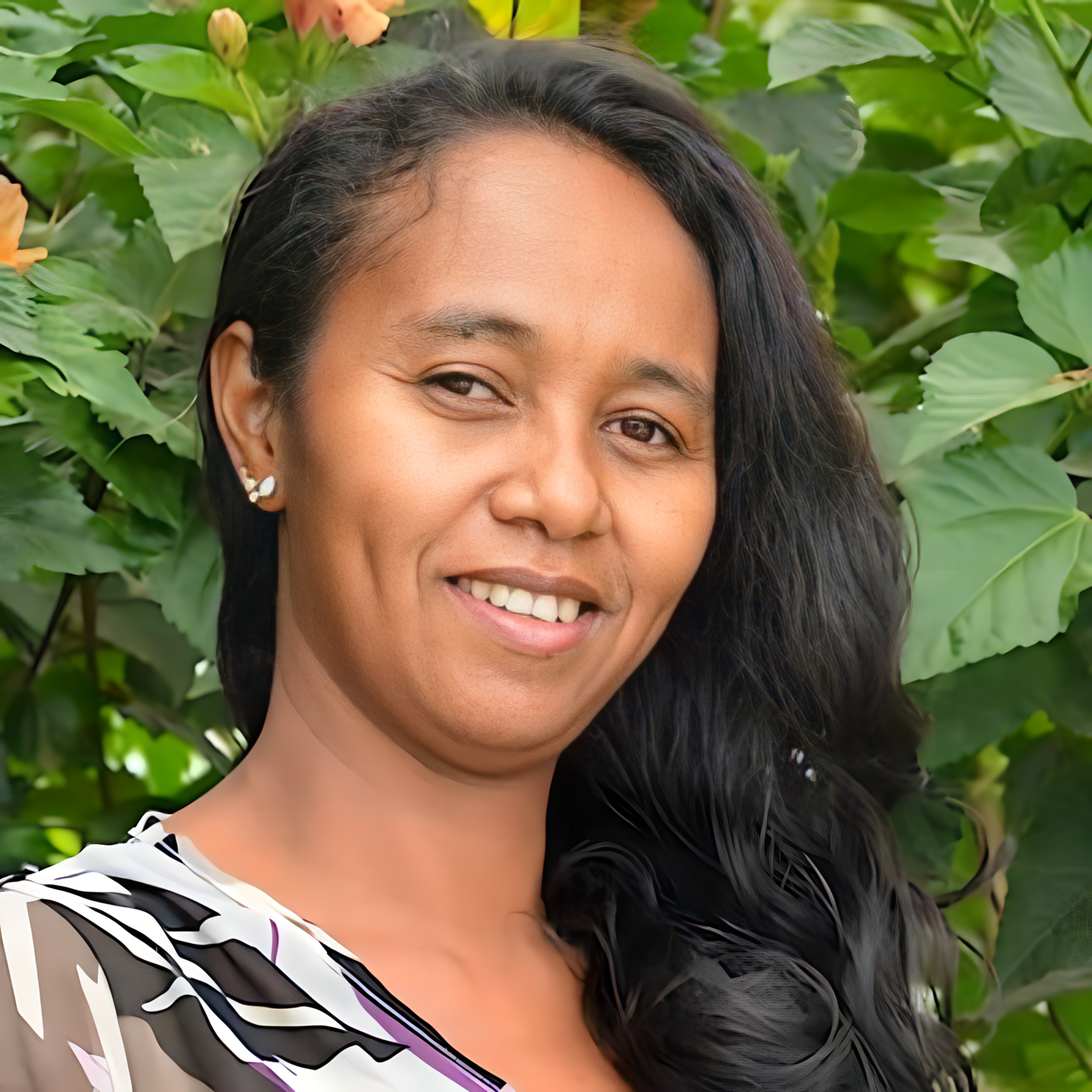
Ambassador of Malagasy fihavanana, based in Antananarivo
For me, traveling to Madagascar is stepping into the spirit of fihavanana: sharing, helping one another, meeting people, and taking time to understand what connects them to their land.
— Noro